
Cooks Corner Asparagus
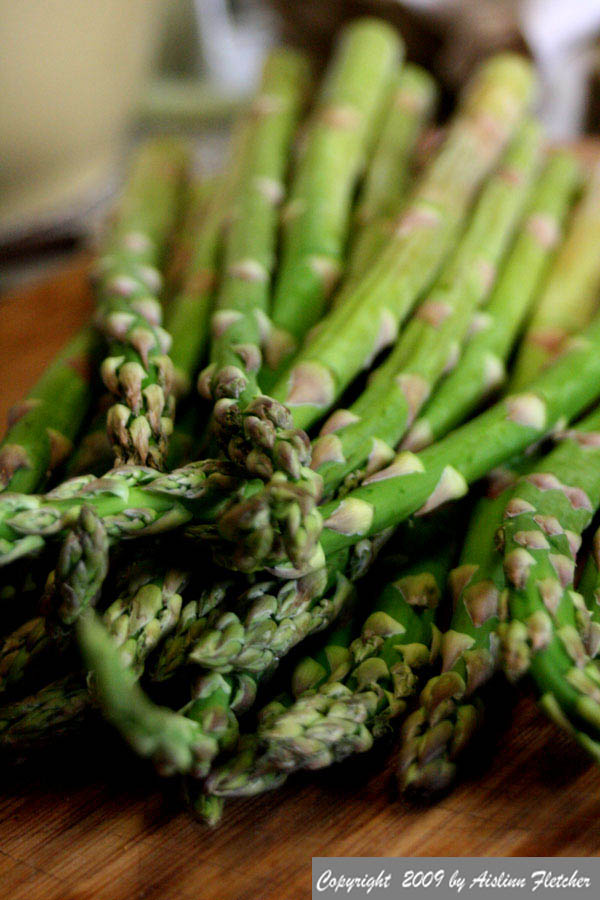
Asparagus is one of the first signs of spring. When I lived on the east coast I believed more in the appearance of local asparagus at the farmer's markets than in the groundhog and his shadow. As a perennial, it is one of the easier vegetables to grow in your garden once the initial work of preparing the bed and planting is over. It takes three years for plants to mature enough for a harvest, so many people choose to plant two year old root clumps, or crowns, to get a faster harvest. However, if you have the patience you may choose to purchase seeds. The seeds are much more inexpensive and there is usually a greater variety to choose from.
Asparagus is a great companion plant for tomatoes, as the tomato plants contain solanine which protects the asparagus from asparagus beetles. White asparagus is not actually a separate variety, but is cultivated by shielding the asparagus shoots from the sun. This is most easily done by piling fresh compost over the young shoots. However, studies have shown that the white asparagus shoots contain less nutrients than their green counterparts.
When your asparagus is ready for harvest, shoots should be snapped off by hand at dirt level. Using a knife or clippers may damage neighboring shoots and cause them to rot, decreasing your harvest. At the end of the harvest season the asparagus will grow into ferns that can reach 5-7 feet tall. These should be left alone until killed by frost, and then they should be removed.
Recipe Links:
Penne Primavera with Asparagus and Spring Peas
Asparagus with Prosciutto and Cocoa Nibs
Return to California Gardens - Cooks Corner