
Monarch Butterfly - Danaus plexippus
The Monarch Butterfly is probably the best recognized butterfly around. People often plant Tropical Milkweed Asclepias curassavica, to encourage the Monarch Butterflies to lay their eggs (see the single monarch egg below) in their yards. The Monarch eggs can often be found on the undersides of the milkweed leaves. The eggs are laid one at a time. Monarch cocoons can be purchased to get your population started. The Monarch caterpillar feeding on the Butterfly Weed, Asclepias tuberosa will gradually eat all of the leaves from the plants before making its cocoon (see below). The Monarch Butterflies will often migrate back to where they left their cocoons. So you can often get the Monarch Butterfly to come back to your butterfly garden and lay another season's eggs year after year. Adult Monarchs will feed on goldenrod (Solidago), a number of salvias, Mustang Mint (Monardella), Plumeria, and a wide variety of plants in the manzanita family. The adult Monarchs also love the nectar of Verbena bonariensis, Verbena lilacina De La Mina, Verbena lilacina Paseo Rancho, and Verbena rigida. The migrations of the Monarch Butterfly's are legendary. Many of the Monarch Butterflies winter in Mexico and make their way to most parts of North America. Some populations over-winter here in Southern California. There are a number of eucalyptus groves that can become draped in butterflies during their stay here in Southern California. The Monarch Butterfly in the third image is sipping the nectar of the California native, Narrowleaf Milkweed, Asclepias fascicularis. The milkweed has a toxin that gets incorporated into the bodies of the Monarch Butterflies and makes them taste bad to some of their predators. There are a number of other butterflies that have similar enough coloring and markings so that birds remember their prior bad experience with a Monarch and they get protection too. Monarch Migration is beyond amazing, reaching from the mountains of Mexico well into Canada. Monarch Butterflies will fly north in the Spring, each generation flying a few weeks until they run out of energy. On their last gasp of life the females lay their eggs. Somehow the resulting caterpillars know what to do. In the Spring they fly on. Somehow during the Summer months they figure they need start flying south again, each leg of their journey takes multiple generations. Some Monarch Butterflies never migrate at all. It is not known exactly what cues their migrating behavior. Any link in this process that breaks can break the Monarch's magical existance. News of illegal logging in Mexico is linked to a Butterfly Decline. As is the removal of trees they cluster in to keep warm in the winter, or a drought that limits the milkweeds that they need to create the next generation to continue their journey.
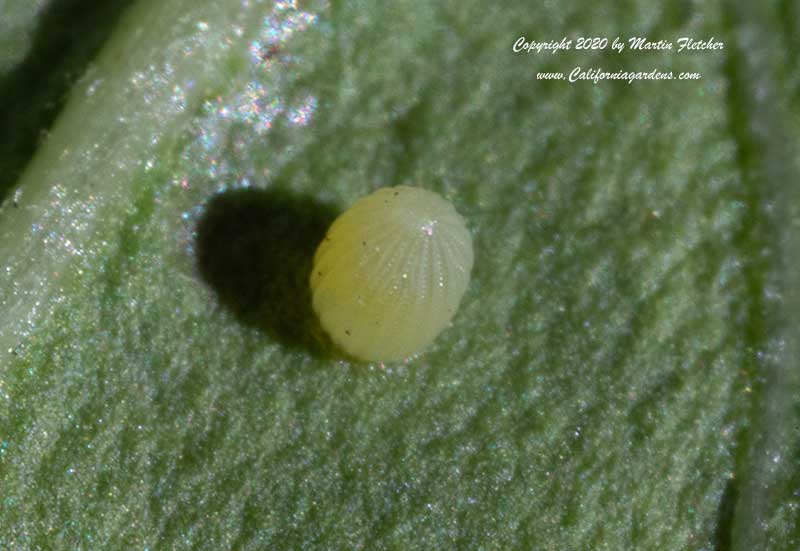
Egg from a Monarch Butterfly - Danaus plexippus. High resolution photos are part of our garden image collection.
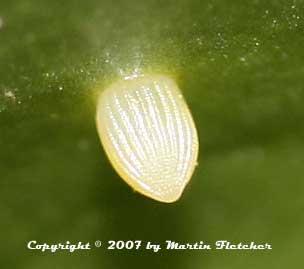
Egg from a Monarch Butterfly - Danaus plexippus. High resolution photos are part of our garden image collection.
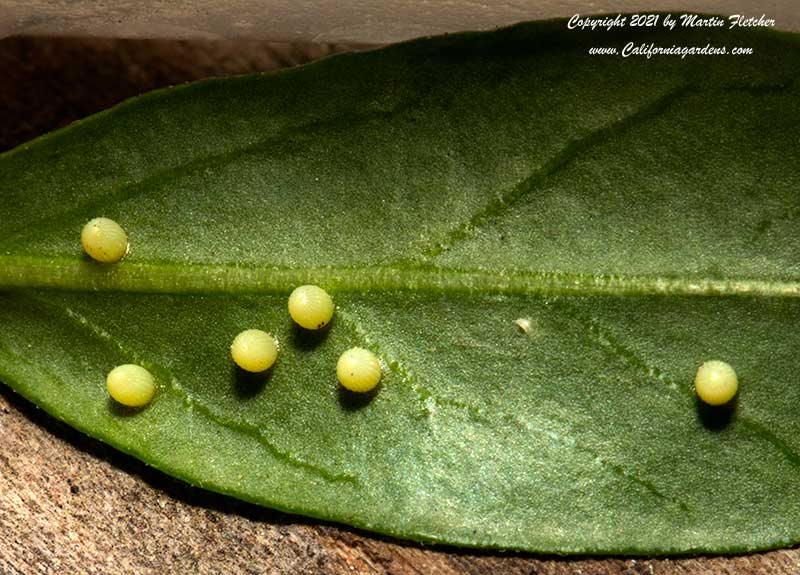
I had read that monarch butterflies spread their eggs out one to a plant so the caterpillars won't run out of food. I found this one plant with multiple eggs on one leaf and 17 on the one plant. All of the other milkweed plants in that garden had zero eggs. Clearly the idea of spreading the eggs about makes sense to us but somehow this butterfly failed to get the memo. The idea of a butterfly in the garden seems such a fleeting moment, clearly this was more than just a brief pause and that was likely due to a recent spate of wind.
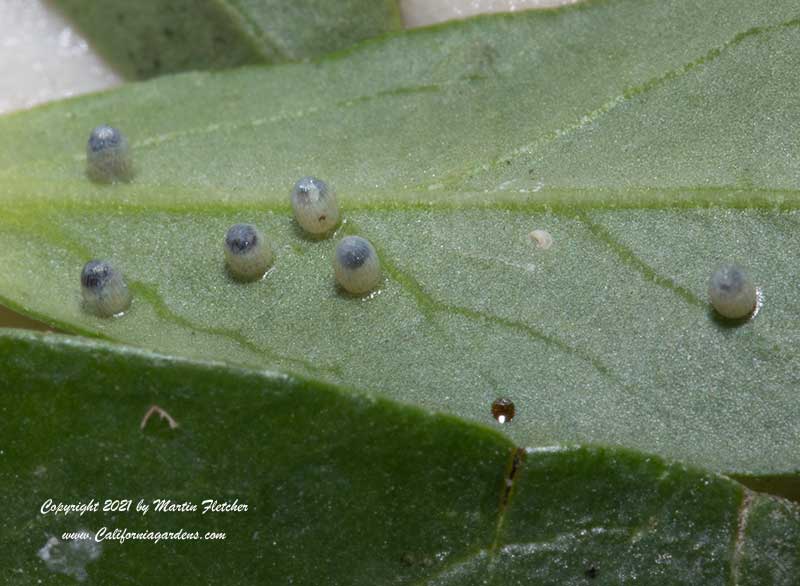
These are the same eggs a few days later. The eggs are transparant. The emerging first stage caterpillars have black heads, pretty cool.
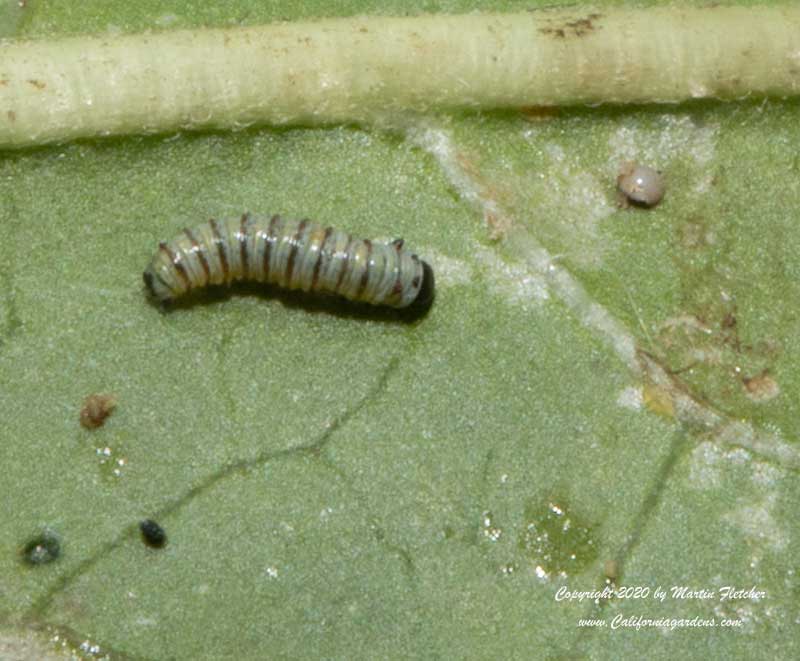
1st instar Monarch Butterfly Caterpillar, note the black head, 1st instar caterpillars are the only stage with a black head. The head is the same size as the egg that it emerged from.
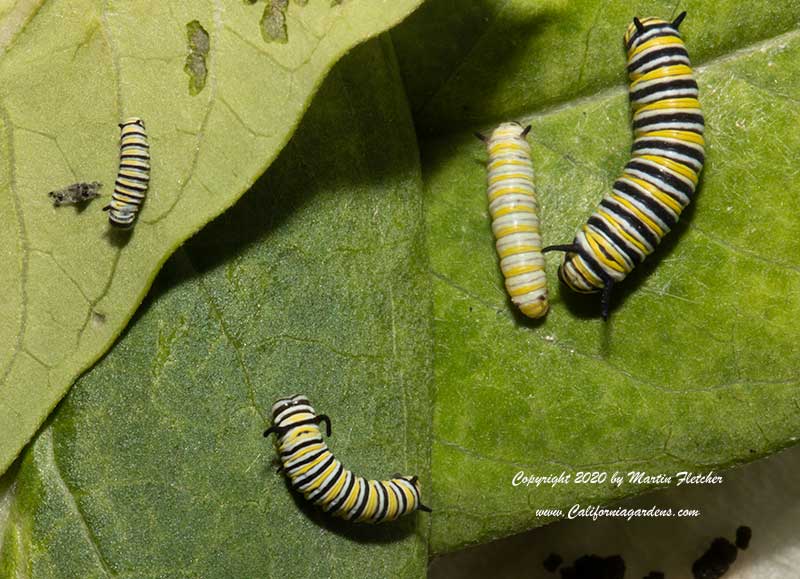
2nd and 3rd instar Monarch Butterfly Caterpillars feeding on tropical milkweed leaves. The antennae are the only true tell, the size is too variable to determine which instar should be used to describe them. Interestingly the yellow caterpillar has maintained its distinctly paler coloring all the way to 5th instar.
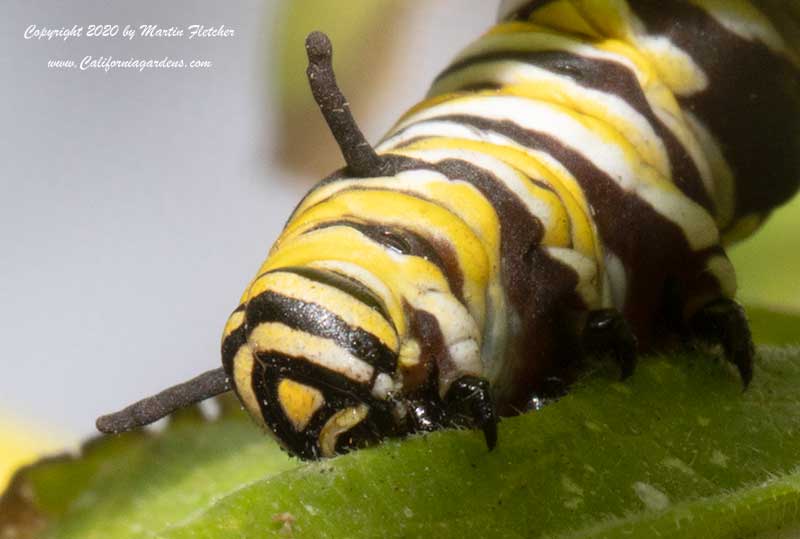
A 4th instar Monarch Butterfly Caterpillar feeding on Asclepias tuberosa, Butterfly Weed. The antennae are the only true tell, the size is too variable to determine which instar should be used to describe them. 5th instar antennae can reach down to the leaf.
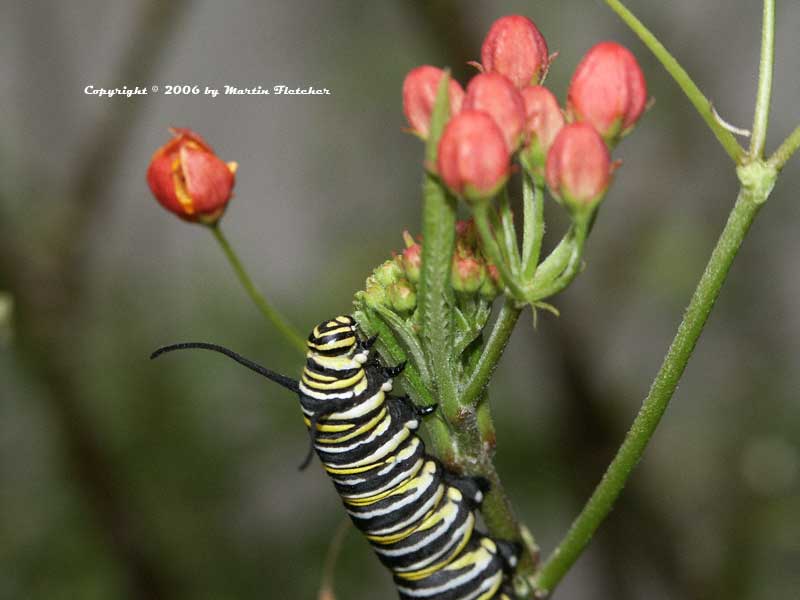
A 5th instar Monarch Butterfly Caterpillar is feeding on tropical milkweed. To keep tropical milkweeds from harming Monarch Butterflies it is recommended that you trim the foliage down to an inch or two above the ground during the winter months. I often do this twice and cut the plants nearly to the ground. The tropical milkweeds almost always recover from this abuse.
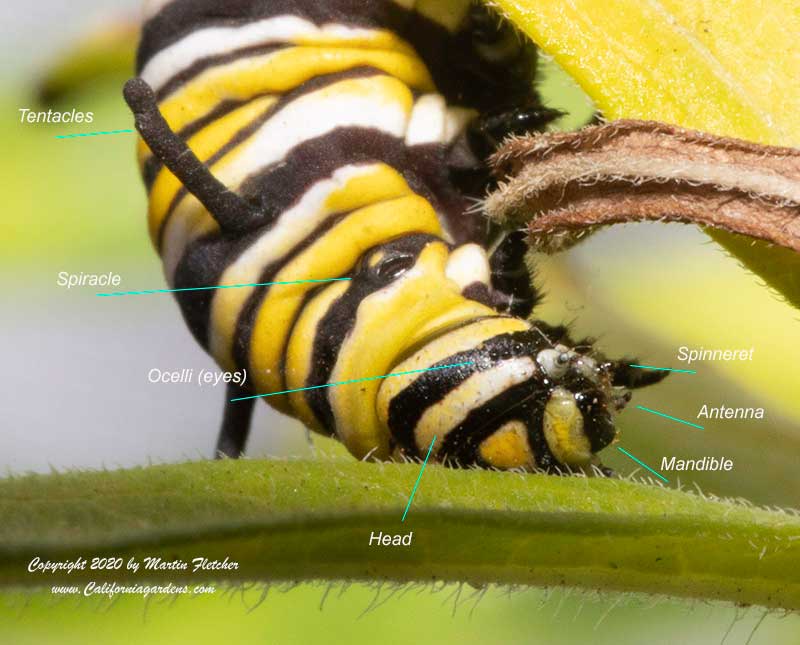
A 4th instar Monarch Butterfly Caterpillar has its anatomy labeled. Tentacles are sensory tools and very active. A spiracle is a breathing organ connected to trachea that spread oxygen throughout the body. Ocelli are rudimentary eyes, there are 6 pairs. The mandible is the mouth. Antenna are sensory organs. And the spinnaret makes silk. Caterpillars often attach themselves to a leaf or branch as they fall, then climb back up the silk. When ready to make their chrysalis they use the silk to attach it to something, often a leaf or branch.
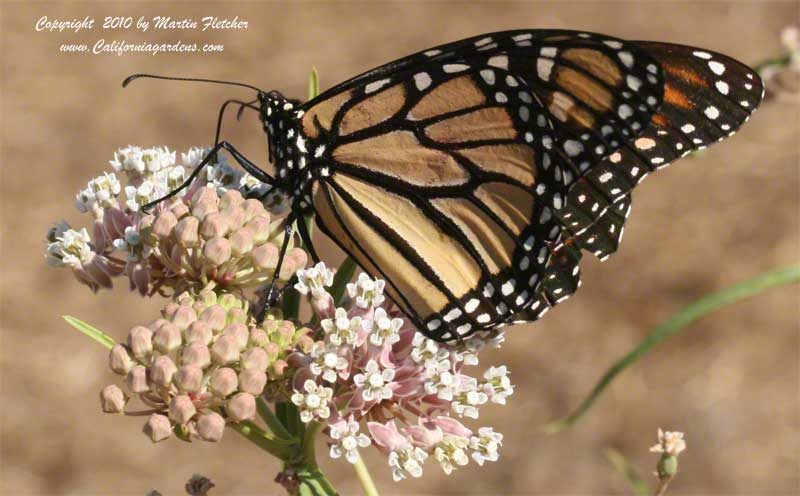
Adult Monarch Butterfly feeding on the native Narrow Leaf Milkweed. Native Milkweeds do not present a problem for the Monarch Butterflies regarding Protozoans as the plants naturally go dormant. The protozoans are a native pest on a native species but they can build up concentrations on tropical milkweeds that can cause problems for the butterflies if the foliage is not periodically removed. The Monarch Butterfly wings get clogged with the tiny organisms and fail to open properly. TheTropical Milkweeds recover quickly from even the most vigorous trim job. Almost everybody knows that insects have 6 legs. But look closely the Monarch Butterflies only have 4. Check around the internet you will almost never see more than 4 legs on a Monarch. The two front legs are held against their body most of the time. They sometimes reach out and touch/smell something with them. They have a sensory ability and do that with their "Brush Feet", legs 5 and 6.
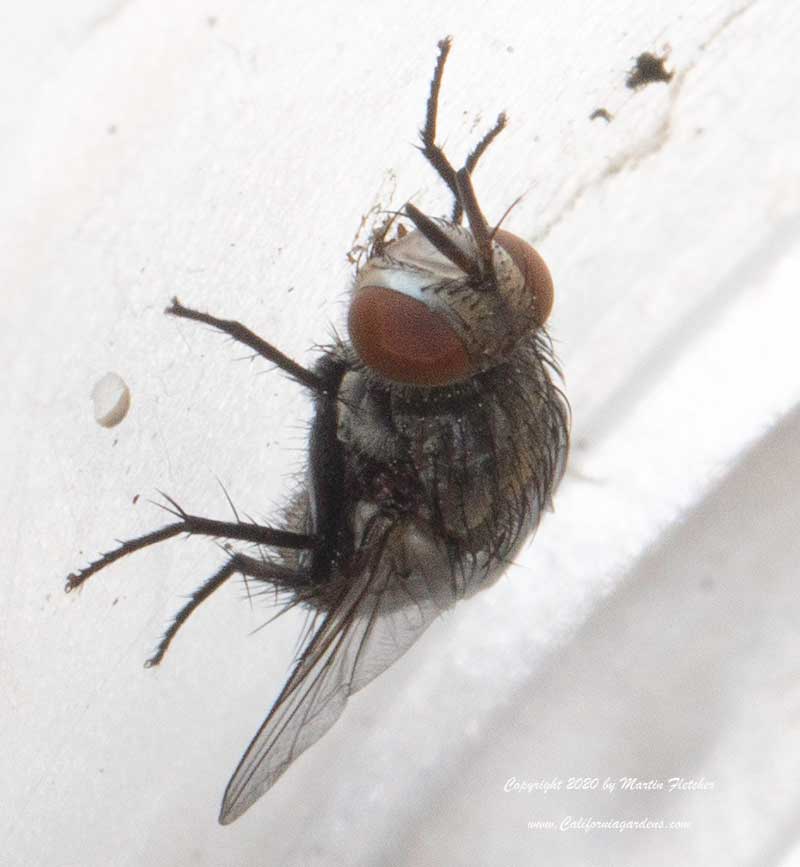
One of the greatest challenges facing the Monarch Butterflies is parasitic fly called a Tachinid. This fly hatched from its pupa after a exiting from its Monarch Host just a few hours before this photo was taken. While I believe in the idea that we should let nature take its course this fly was not released.
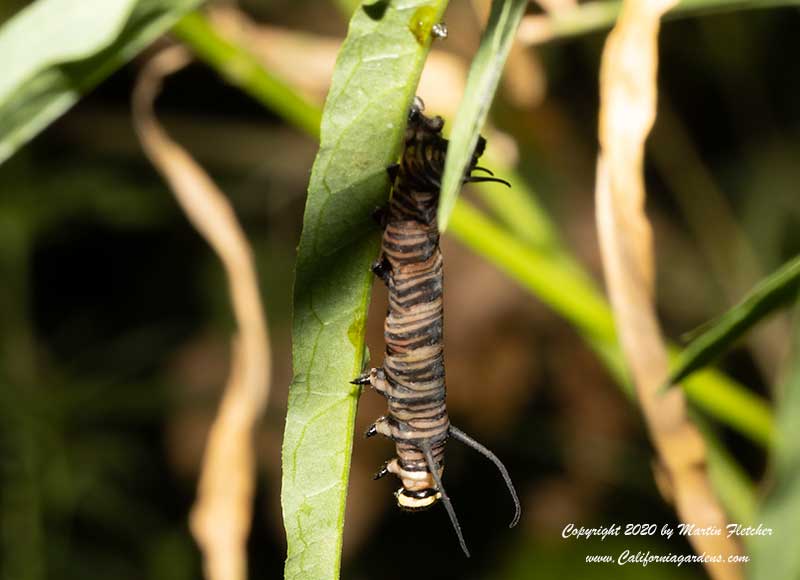
This injured Monarch Butterfly went from its normally vibrant colors to looking like this dark menace over the course of a day while I was at work. The Monarch hung like this for a couple more days before disappearing. It is likely that this monarch caterpillar had been parasitized by a Tachinid Fly. The droppings changed from their normal black dots to these translucent volcanos.
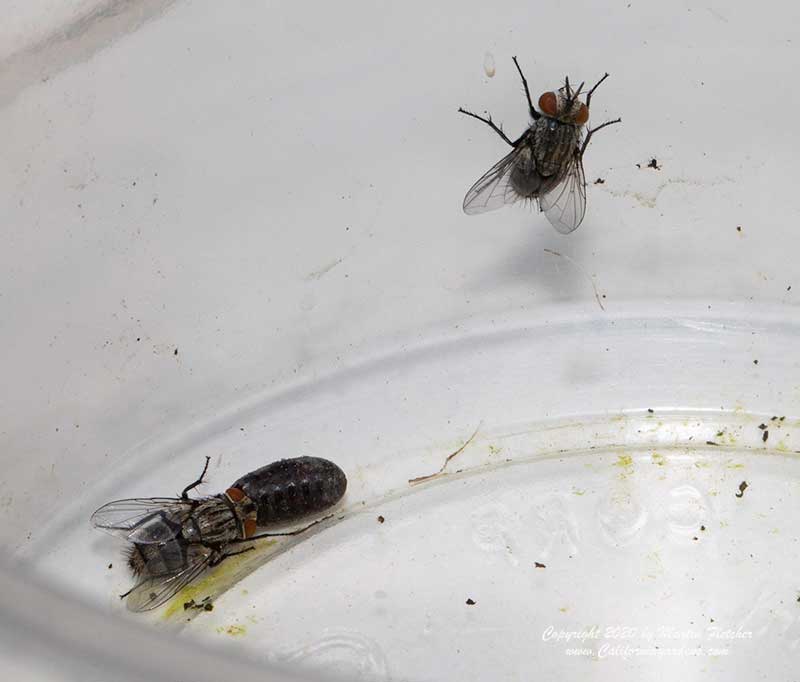
Tachinid flies parasitize Monarch Butterflies by laying their eggs in Caterpillars, and Chrysalis' while they are still soft or Adult Monarch Butterflies. The eggs hatch and the maggots eat the Monarch Butterflies from the inside out. When they emerge from their Monarch host they parachute down on silk threads. These Tachinid Flies just hatched from their pupa 12 days after leaving their Monarch Host. There is still one left to emerge.
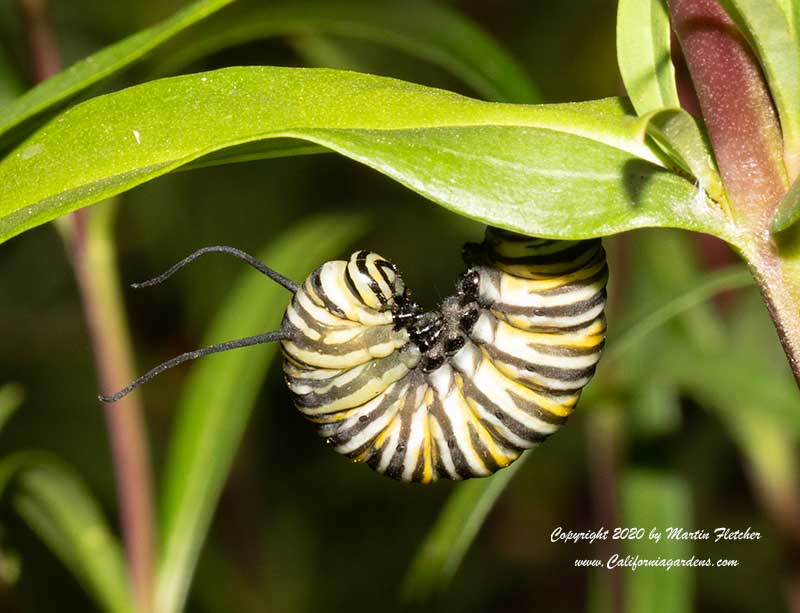
After 5 instars the Monarch Caterpillar hangs in a J shape as it prepares to form the Chrysalis within which it will turn into a Butterfly.
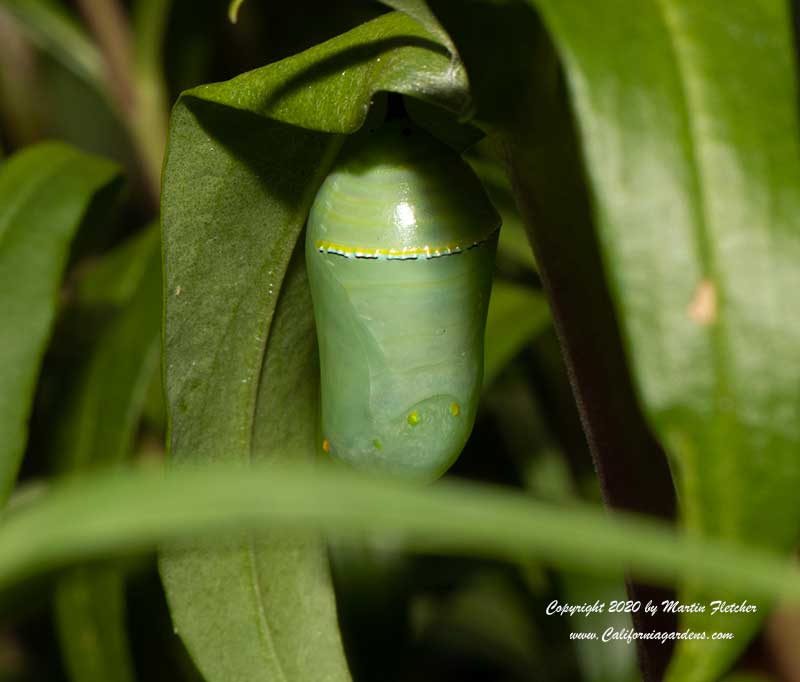
A freshly formed Monarch Chrysalis, you can faintly see the Monarch Butterfly inside.
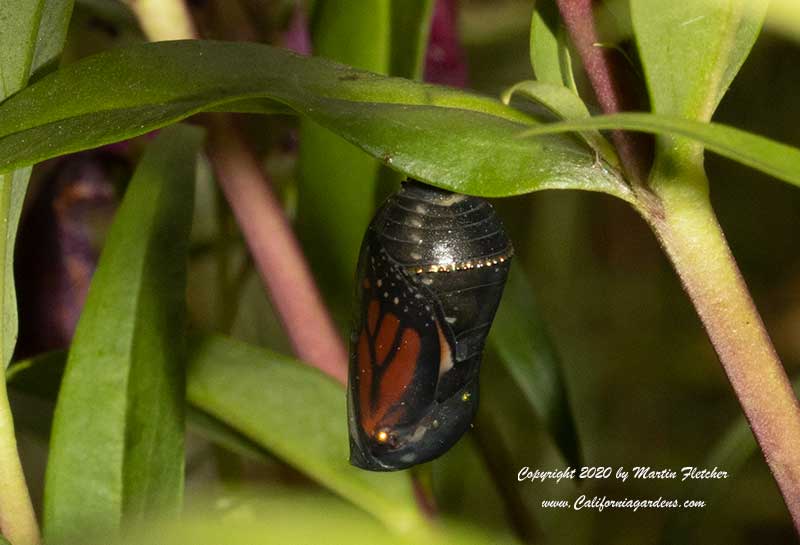
An almost Emergent Monarch Chrysalis that is so close to popping you can see the Monarch Butterfly inside. This is what happens when everything goes right. The Monarch Caterpillar attached its chrysalis to a nearby Penstemon bush.
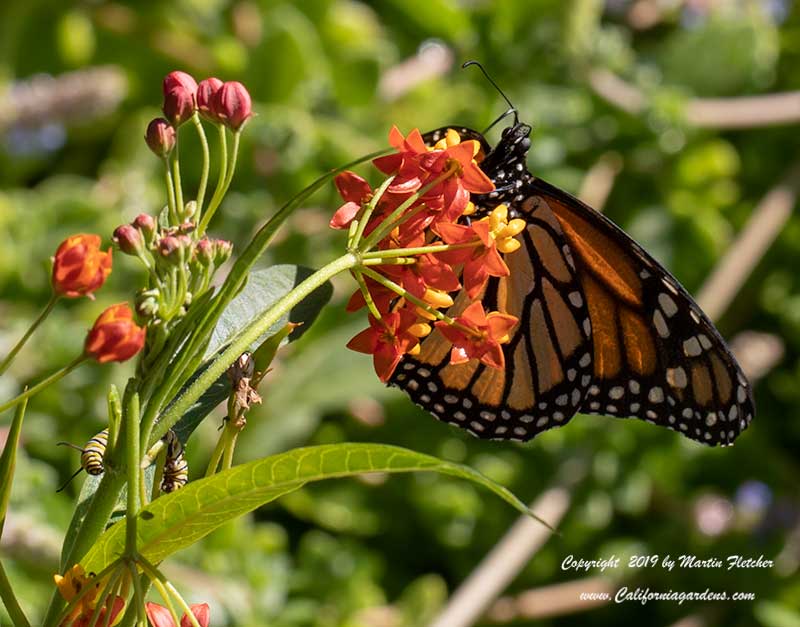
Adult Monarch Butterfly and Monarch Caterpillar feeding on Tropical Milkweed.
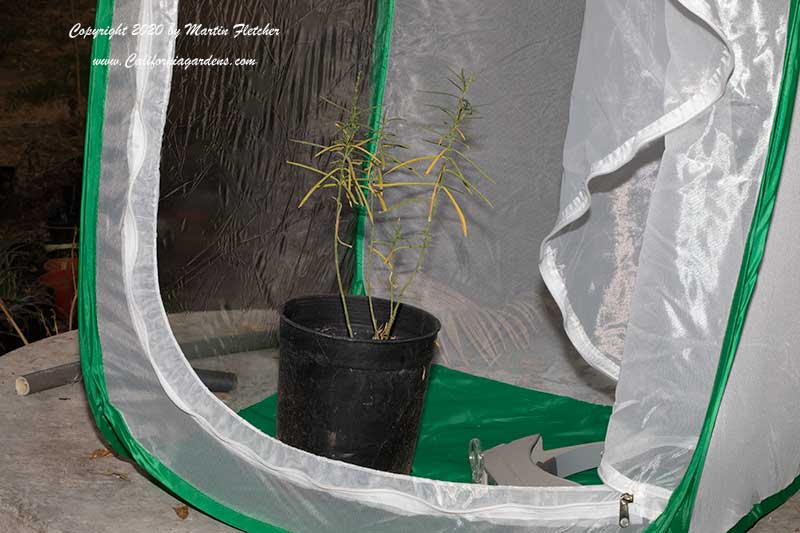
Monarch Caterpillars feeding on Narrow Leaf Milkweed in a Monarch House protecting them from Tachinid Flies and Wasps.
I got to see the most amazing Monarch farming operation recently. A client is farming monarch caterpillars to great success. She bought herself a bunch of milkweed plants of varying species. Each day she searches her plants for eggs and clips off the portions of the leaf with an egg and brings all of the eggs indoors and puts them leaf and all on a damp paper towel in a baking dish covered with saran wrap to keep out the flies. When the caterpillars mature enough, usually by the 3rd instar, she puts them outside on plants that she has put into a monarch house. A 2 x 2 x 3 foot screened in box with a zippered door and one clear side. The Monarch house keeps out the parasitic tachinid flies and is big enough to house a live plant or two. She lays the caterpillars on their leaves at the base of the sheltered plant and they climb up and eat away. She started her farm a little more than a month ago and has released well north of 100 adult monarchs. 7 monarchs were released while I was working there. I was sent home with two houses and about 50 eggs and caterpillars of various ages to start a farm of my own. I sized up a bunch of my milkweed plants to encourage them to grow faster a few weeks ago. Adding the additional room for the roots worked but I am not sure the milkweeds will grow and regrow fast enough to keep up with all of my hungry dinner guests. The Monarch population has chrashed and is at less than one percent of its historical levels. There are wonderful ways to help these beloved butterflies with citizen science by connecting with the Xerces Society
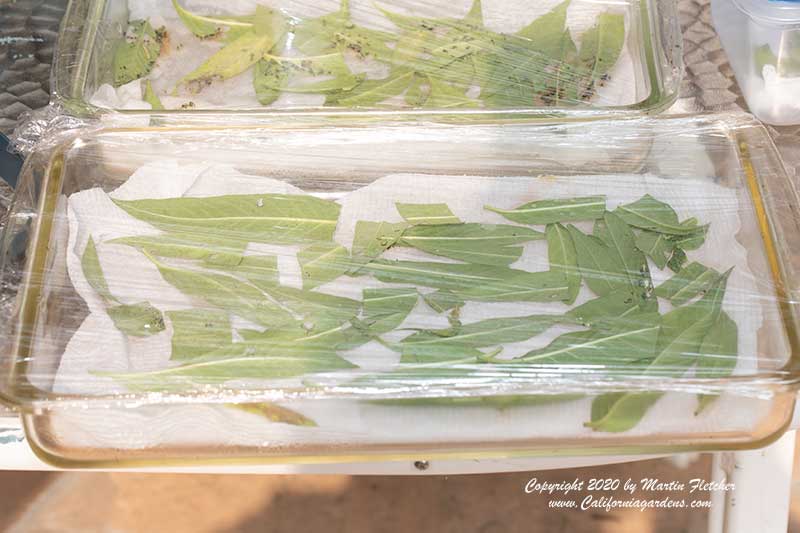
Monarch Eggs and Caterpillars collected and fed through their early instars in a baking dish protecting them from tachinid flies.
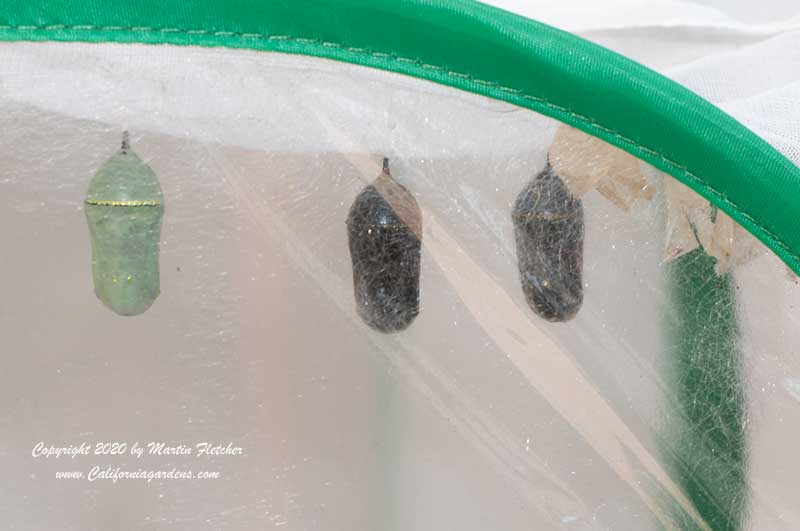
Monarch chrysalis' hanging in a monarch house to protect them from tachinid flies. Note that some are green and others black. Once the Chrysalis turns black the Monarch Butterfly is close to emerging. Once the butterfly emerges it leaves the transparant chrysalis behind.
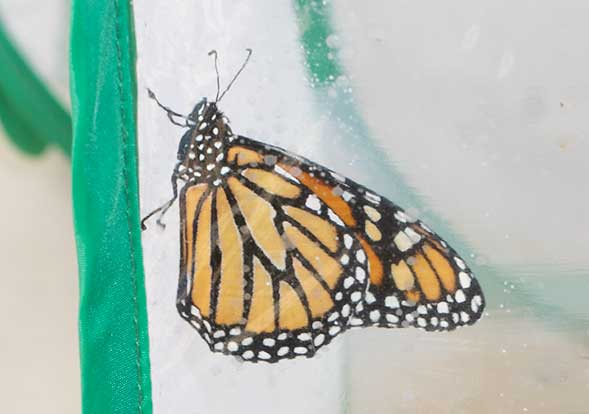
A Monarch Butterfly is just pumping up its wings after emerging from its chrysalis less than an hour prior to the photo. The Monarch Butterflies are being kept in a monarch house to protect the from predators, but primarily to protect them from tachinid flies prior to their release. I put in a link for the butterfly house used on this Monarch Butterfly farm. Profits from these Amazon links support our site. Thanks for your support.
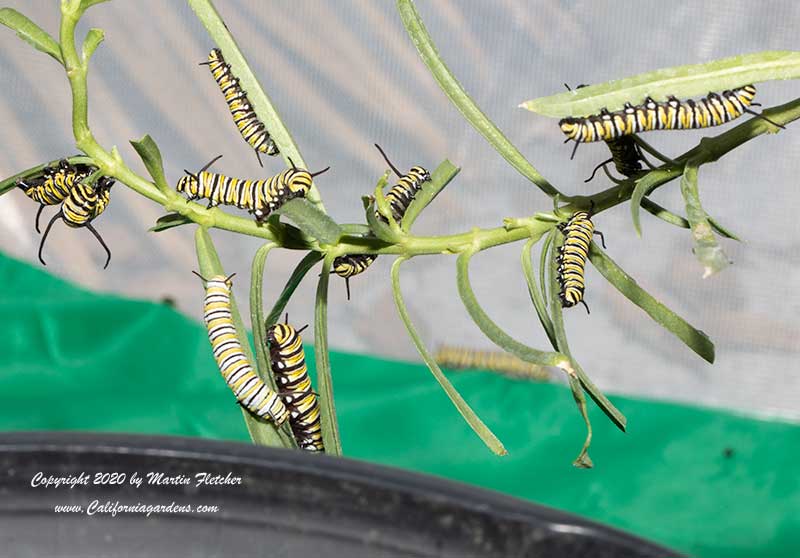
A swarm of Monarch Butterfly Caterpillars feeding on Narrow Leaf Milkweed, Asclepias fascicularis. I had propagated a lot of plants but they were in small pots, to amplify the foliage I sized the milkweeds into larger pots. I am sure it won't surprise you looking at this photo that the caterpillars will finish off the leaves from this plant in less than a day. Thankfully I was prepared with a lot of food for my dinner guests.
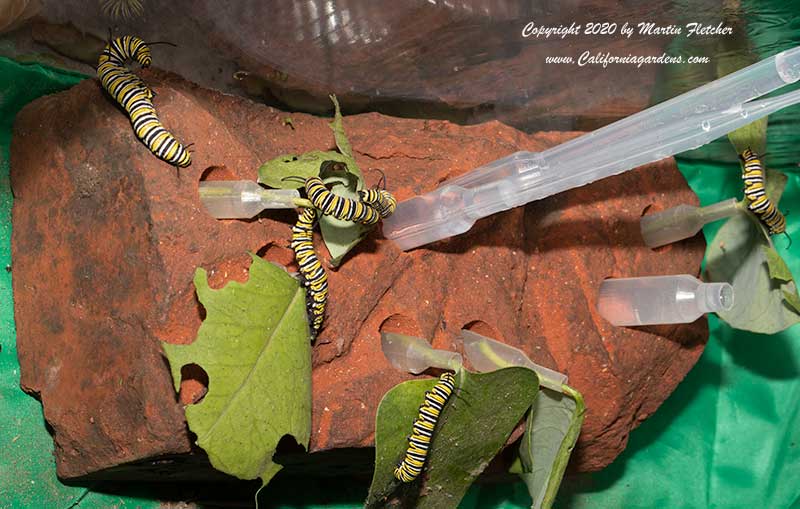
A feeding brick for the Monarch Butterfly Caterpillars, they are feeding on Bladder Vine, Araujia sercifera. An early test was to see if the Milkweed related Bladder Vine was acceptable food for the Caterpillars. They were slow to think that this would be OK until the Narrow Leaf Milkweed plant started to get pretty bare. Then at every instar level they ate the Bladder Vine with the same enthusiasm as they did Tropical Milkweed plants I stuck in next. I have started propagating both the Bladder Vine and the Tropical Milkweeds from the striped bare stems that the caterpillars left me. The brick was meant to hold down the Butterfly house at first but then with the aid of a masonry bit the brick became a vase holder for the milkweed leaves and stems of plants from the garden.
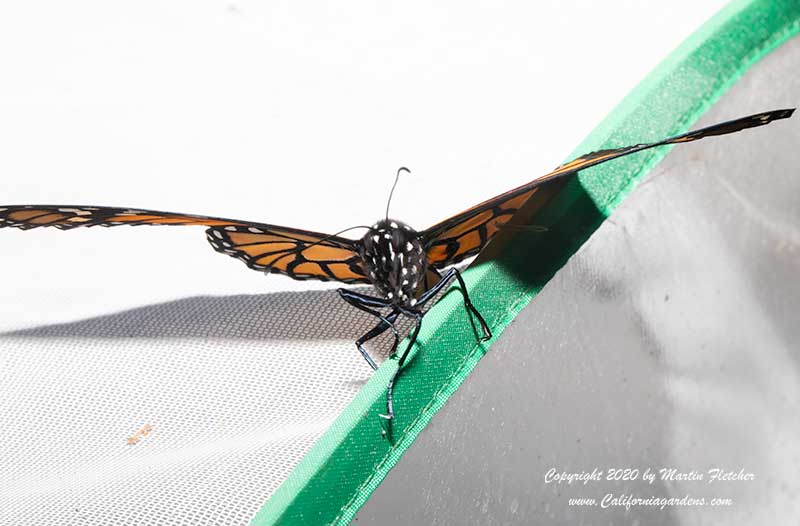
A Monarch Butterfly has just been released. But is not quite ready to fly. The wings are still drooping a bit, he hung around for a few moments while I took his portrait. Monarch's come in two sizes the bigger ones are better adapted to flying long distances and the smaller ones are more manueverable, better for laying eggs.
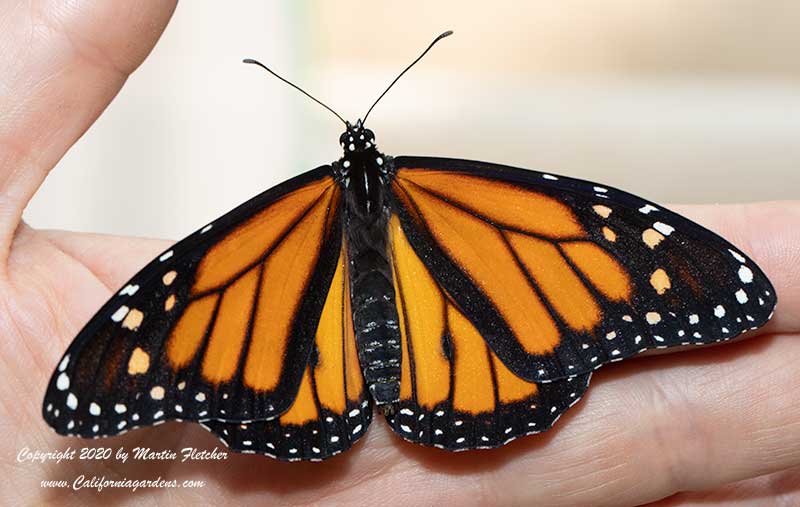
A male Monarch Butterfly is about to be released. Note the dark spots on the hind wing. These spots are glands that are unique to male Monarch Butterflies. The glands secrete pheromones (a fancy word for perfume) into the atmosphere that attracts female Monarch Butterflies.
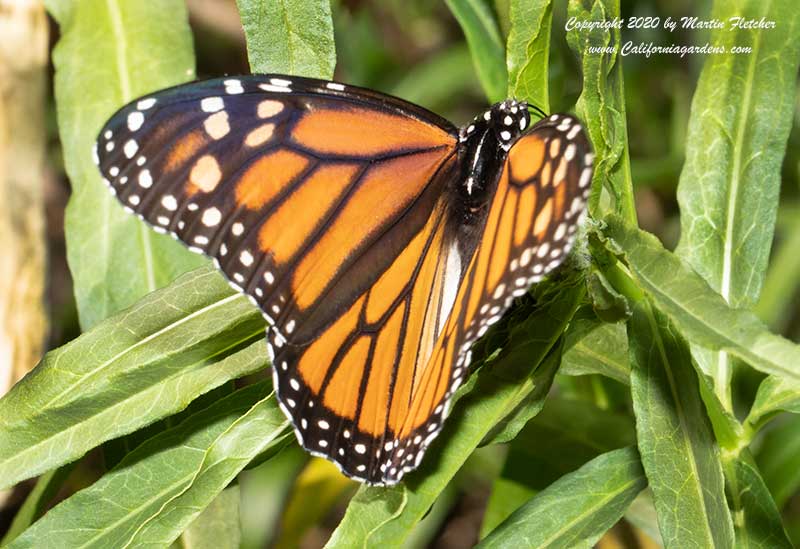
A female Monarch Butterfly is about to lay an egg. It takes 3-5 days for an egg to hatch. Note the dark spots on the hind wing of the previous butterfy image. These spots are glands that are unique to male Monarch Butterflies. The glands secrete pheromones (a fancy word for perfume) into the atmosphere that attracts female Monarch Butterflies.
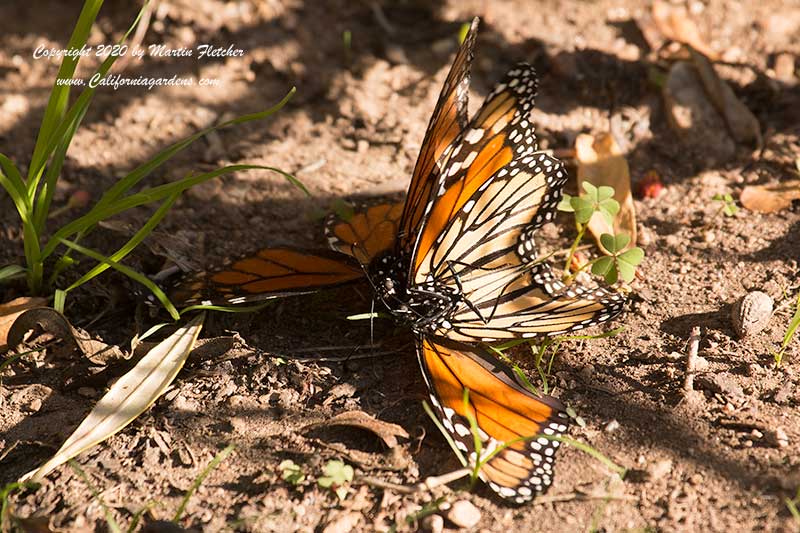
At a ripe old age of 3-8 days Monarch Butterfies are mature enough to mate. The male attracts the female with his scent glands. She flies by and catches his attention, he chases until he catches her. A mating flight can last up to 16 hours. The male is the one in the back. The eggs are fertilized as they are laid. Monarchs can mate more than one time, many insects can only mate once.
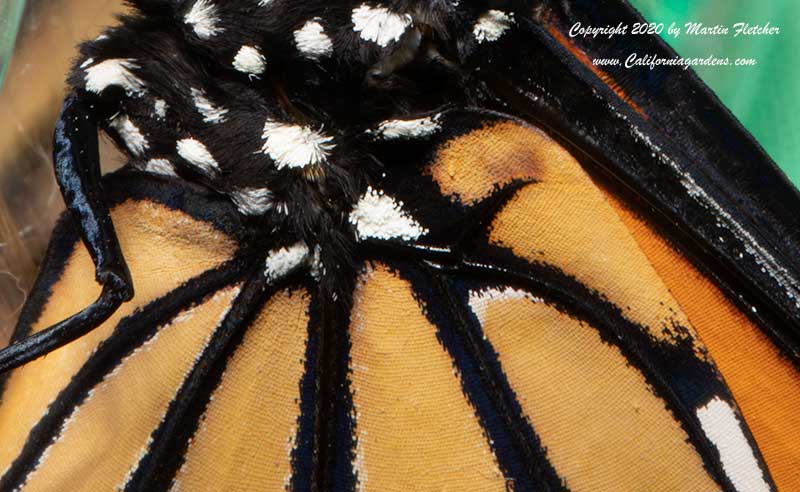
The beautiful paterns and colors of a Monarch Butterfly come from hairs and scales on the wings and body of the butterfly.
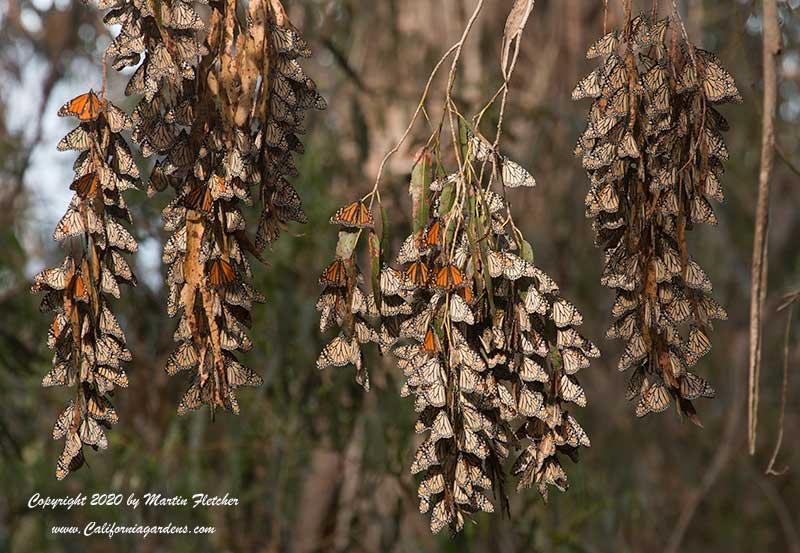
Between November and January Monarch Butterfies migrate to protected locations along the Coast of California and the Mountains of Mexico where they roost . They hang in large clusters like this one in Elwood Preserve near Santa Barbara. They shiver to keep each other warm.
A Video that follow the life cycle of Monarch Butterflies from laying eggs to forming their chrysalis.
A video of a Monarch Caterpillar, followed by an Adult laying eggs on Asclepias fascicularis the Narrowleaf Milkweed. More information on growing the Narrowleaf Milkweed in your garden can be found by following the link. High resolution photos of this plant are part of our garden image collection.
Plants for Monarch Butterflies
Abelia grandiflora
Abelia grandiflora Francis Mason * Francis Mason Abelia
Abelia grandiflora Kaleidoscope * Kaleidoscope Abelia
Araujia sericifera * Bladder Vine, Cruel Vine, Moth Vine
Arbutus Marina * Marina Strawberry Tree
Arbutus unedo * Strawberry Tree
Arctostaphylos edmundsii Danville * Danville Manzanita
Arctostaphylos edmundsii Little Sur * Little Sur Manzanita
Arctostaphylos Howard McMinn * Vine Hill Manzanita
Arctostaphylos insularis * Island Manzanita
Arctostaphylos John Dourley * John Dourley Manzanita
Arctostaphylos Lester Rowntree * Lester Rowntree Manzanita
Arctostaphylos Pacific Mist * Pacific Mist Manzanita
Araujia sericifera * Bladder Vine, Cruel Vine, Moth Vine
Asclepias angustifolia * Arizona Milkweed
Asclepias californica * California Milkweed
Asclepias cordifolia * Purple Milkweed
Asclepias curassavica * Tropical Milkweed
Asclepias curassavica Red Butterflies * Red Butterflies Tropical Milkweed
Asclepias curassavica Silky Gold * Silky Gold Tropical Milkweed
Asclepias eriocarpa * Woollypod Milkweed, Indian Milkweed, Kotolo Milkweed
Aslepias erosa * Desert Milkweed
Asclepias fascicularis * Narrow Leaf Milkweed
Asclepias linaria * Pine Needle Milkweed
Asclepias speciosa * Showy Milkweed
Asclepias subulata * Rush Milkweed, Skeleton Milkweed
Asclepias tuberosa * Butterfly Weed
Aster chilensis Purple Haze * Purple Haze California Aster, Purple Haze Pacific Aster
Baccharis pilularis * Coyote Brush
Berberis nevinii * Nevin's Barberry
Berberis thunbergii atropurpurea * Japanese Barberry
Buddleia Black Knight * Black Knight Butterfly Bush
Buddleia Blue Ribbon * Blue Ribbon Butterfly Bush
Buddleia Color Crush * Color Crush Butterfly Bush
Buddleia Harlequin * Harlequin Variegated Butterfly Bush
Buddleia Lochinch * Lochinch Butterfly Bush
Buddleia Miss Molly * Miss Molly Butterfly Bush
Buddleia Nanho Purple * Nanho Purple Butterfly Bush
Buddleia Pink Delight * Pink Delight Butterfly Bush
Buddleia White Profusion * White Profusion Butterfly Bush
Buddleia lindleyana * Weeping Butterfly Bush
Buddleia marrubifolia * Woolly Butterfly Bush
Buddleia weyeriana Honeycomb * Honeycomb Butterfly Bush
Ceanothus Centennial * Centennial California Lilac
Ceanothus burtonensis Far Horizons * Far Horizons California Lilac
Ceanothus Concha * Concha California Lilac
Ceanothus crassifolius * Hoary California Lilac
Ceanothus Dark Star * Dark Star California Lilac
Ceanothus Frosty Dawn * Frosty Dawn California Lilac
Ceanothus gloriosus Anchor Bay * Anchor Bay California Lilac
Ceanothus greggii * Desert Ceanothus
Ceanothus hearstiorum * Hearst's California Lilac
Ceanothus Joan Mirov * Joan Mirov California Lilac
Ceanothus Joyce Coulter * Joyce Coulter California Lilac
Ceanothus megacarpus * Bigpod California Lilac
Ceanothus oliganthus soriedatus Jim Brush, Hairy Ceanothus
Ceanothus Point Sierra * Point Sierra California Lilac
Ceanothus Ray Hartman * Ray Hartman California Lilac
Ceanothus Snow Flurry * Snow Flurry California Lilac
Ceanothus spinosus * Greenbark Ceanothus, Redheart California Lilac
Ceanothus Tassajara Blue * Tassajara Blue California Lilac
Ceanothus Valley Violet * Valley Violet California Lilac
Ceanothus Wheeler Canyon * Wheeler Canyon California Lilac
Ceanothus Yankee Point * Yankee Point California Lilac
Chilopsis linearis * Desert Willow
Chilopsis Purple Splendor Purple Splendor Desert Willow
Chrysothamnus nauseosus * Rabbit Brush
Cirsium occidentale * Cobwebby Thistle
Encelia californica * California Brittle Bush, Coast Sunflower
Encelia californica El Dorado * El Dorado Brittle Bush
Encelia Californica Paleo Yellow * Paleo Yellow Brittle Bush
Encelia farinosa * Brittle Bush
Encelia ventorum * Baja Bush Sunflower
Ericameria nauseosa * Rabbit Brush
Erigeron argentatus * Silver Fleabane
Erigeron Bountiful * Bountiful Seaside Daisy
Erigeron karvinskianus Santa Barbara Daisy, Mexican Daisy
Erigeron Sea Breeze * Sea Breeze Seaside Daisy
Erigeron speciosa * Aspen Fleabane, Showy Fleabane, Oregon Fleabane
Erigeron Wayne Roderick * Wayne Roderick Seaside Daisy
Eriodictyon crassifolium * Felt Leaved Yerba Santa
Eriodictyon tomentosum * Woolly Yerba Santa
Gomphocarpus fruticosus * Swan Milkweed, Narrow Leaf Cotton Plant
Gomphocarpus physocarpus * Family Jewels, Hairy Balls
Hoya carnosa * Wax Vine
Lantana Luscious Citrus Blend
Lantana variegata Lemon Swirl
Lathyrus sativus azureus * Electric Blue Sweet Pea
Lobelia excelsa * Devil's Tobacco
Lobelia laxifolia * Mexican Lobelia
Mahonia nivinii * Nevin's Barberry
Malosma laurina * Laural Sumac
Monardella lanceolata * Mustang Mint
Monardella odoratissima * Mountain Monardella, Desert Mint
Prunus andersonii * Desert Peach
Prunus campanulata * Taiwan Flowering Cherry
Prunus ilicifolia * Holly Leaf Cherry
Prunus ilicifolia lyonii * Catalina Cherry
Rhus integrifolia * Lemonade Berry
Rhus ovata * Sugar Bush
Ribes aureum * Golden Currant
Ribes malvaceum * Chapparal Currant
Ribes malvaceum viridifolia Ortega Beauty * Ortega Beauty Currant
Ribes speciosum * Fuchsia Flowered Currant
Salvia Allen Chickering * Allen Chickering Sage
Salvia apiana * White Sage
Salvia brandegeei * Brandegee's Sage, Santa Rosa Island Sage
Salvia carduacea * Thistle Sage
Salvia clevelandii * Cleveland Sage
Salvia Desperado * Desperado Sage
Salvia dorrii dorrii * Purple Desert Sage
Salvia leucophylla Amethyst Bluff * Amethyst Bluff Purple Sage
Salvia leucophylla Bee's Bliss * Bee's Bliss Sage
Salvia leucophylla Point Sal Spreader * Point Sal Spreader Purple Sage
Salvia mellifera * Black Sage
Salvia mellifera Green Carpet * Green Carpet Creeping Sage
Salvia mellifera Skylark * Skylark Sage
Salvia mellifera Terra Seca * Dwarf Black Sage
Salvia munzii * San Diego Sage, Munz's Sage
Salvia munzii Emerald Cascade * San Miguel Mountain Sage, Munz's Sage
Salvia uliginosa * Blue Spike Sage, Bog Sage
Salvia Winnifred Gilman * Winnifred Gilman Sage
Sidalcea malvaeflora * Checker
Spharalcea ambigua * Desert Mallow
Spharalcea ambigua rosacea * Rosy Apricot Mallow, Apricot Globemallow
Spharalcea fulva La Luna La Luna Globe Mallow
Spharalcea philippiana * Trailing Globemallow
Tetraneuris acaulis * Angelita Daisy, Stemless Four Nerve Daisy
Tithonia rotundifolia * Mexican Sunflower
Trichostema lanatum * Woolly Blue Curls
Trichostema lanceolatum * Vinegar Weed
Trichostema Midnight Magic * Midnight Magic Blue Curls
Verbascum chaixii album * Nettle Leaved Mullein
Verbascum Southern Charm * Southern Charm Mullein
Verbena bonariensis * Purpletop Vervain
Verbena bonariensis Little One * Dwarf Purpletop Vervain
Verbena lilacina De La Mina * Cedros Island Verbena
Verbena lilacina Paseo Rancho * Paseo Rancho Verbena
Verbena rigida * Sandpaper Verbena