Attracting Wildlife to Your Garden
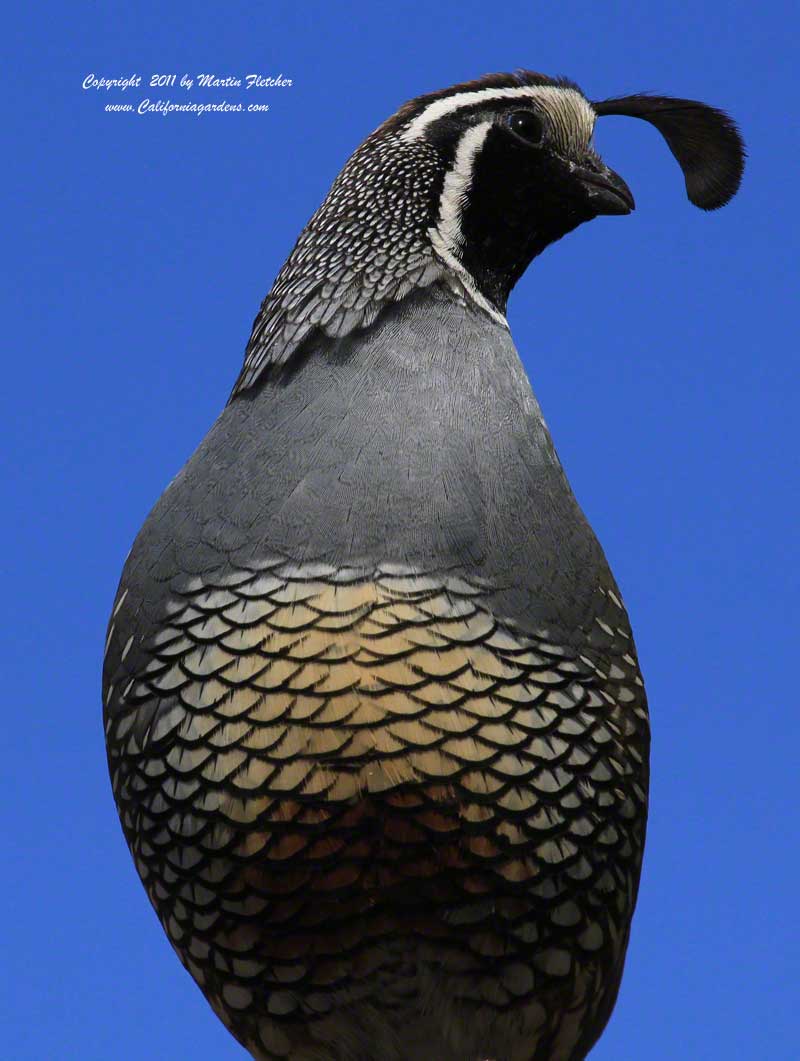
Try to imagine a garden where the only thing that was alive was a plant. I certainly can't, though the folks from one of those pest services might be able to. One of the purposes for my garden is attracting wildlife. In fact I could hardly call it a garden without all of the wildlife. The California Quail in my berry patch make so many great noises all day and at night in the hedge along my drive as I walk under their roost. A Phainopepla pair lives in the hedge along my drive. Each morning on my way to fetch the paper they whistle at me, so I whistle back. When my plumcot/pluot is in full bloom the air is alive with the buzz of the bees. A fountain without fish, why bother? The chlorine you have to use to keep the bugs at bay sucks the color out of everything it touches. The scrub jay that plants all of those acorns all year and regularly crashes into my bird feeder scattering sparrows and seed in every direction would be sorely missed. Somebody in the neighborhood must feed them sometimes. When I am watering in my garden they land close and wing beg hoping for a handout. The bats that live in the inner workings of my pool table add a real thrill to the first break and keep the biting bugs at bay as well. I love to stroke the spiders on their backs. They start to trampoline to make themselves look ferocious. We got a striped racer, a coachwhip, a gopher snake, and a king snake each visiting for awhile, then moving on. I hope they took a couple of gophers with them. There are a pair of red shouldered hawks that nest in the trees adjacent to our house each year. They come down to watch the chickens from the top of the coop on a regular basis to make sure that none of those chickens have come out to play. The chickens sure make a racket when this happens. The chickens are safe even if they are not so sure. A neighbor set up a barn owl box a few years ago. Each year a new crop of owls has to be fed. These guys put a huge dent in the local rodent population
I think that birds, bats, and bugs should all be part of what goes on in my garden. They all add to what entertains me. At night I can hear as many as 6 Great Horned Owls calling one another, unless it is the morning of the Audubon Christmas Bird Count and on that day they are almost always mute. Bats fly about at night eating mosquitoes, and in the spring swallows do this all day too. Tree frogs spend their days in the bromeliads and hop from fountains up into the oak trees. I counted more than 50 going up one evening at dusk and then more than a few falling back down only to climb again. Spiders and Mantis' eating bees and all sorts of other bugs. And then there are the nesting Titmice, robins, and woodpeckers. We had a family of violet green swallows that showed up several years ago and took up residence in a bird house I had made. The following year they came back with their brood and filled 2 more houses.
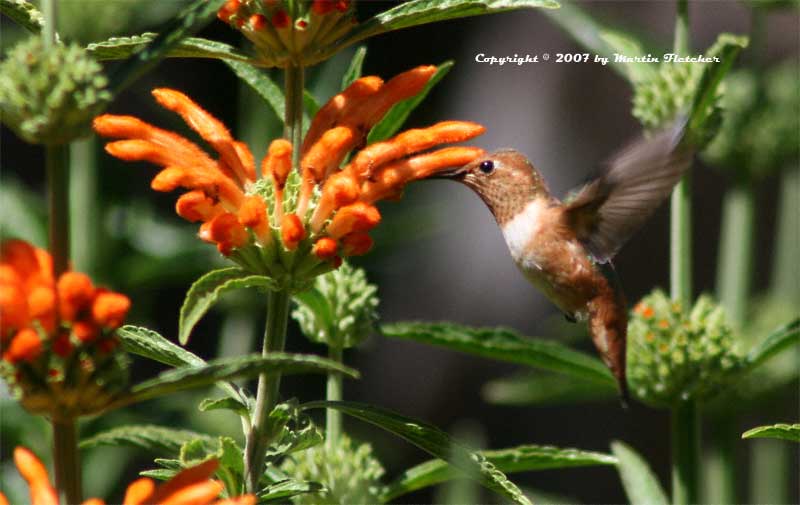
I have worked hard at attracting wildlife to my garden. I have built bat houses, scads of birdhouses, mason bee houses and put in water features. It is important to provide housing, cover, and water. Some will come to food but most will come regardless. A diverse group of flowering plants will provide seed all year long and many will provide nectar while they are flowering. Red berries and tubular flowers, especially red ones are very attractive to birds. Butterflies are nectar feeders in their adult stage as well. Providing plants with a large supply of nectar producing flowers brings both the butterflies and the hummingbirds.